How to prepare for your first therapy session
Published by Therapy Agenda (SessionPrep) | Updated September 12, 2026
Bring the information your provider requested, a short note about why you booked, and the questions you want to ask. You can start with an unfinished thought. A preparation note is a reminder for your conversation, not a diagnosis or a test to pass.
Check the appointment instructions
Confirm the time, location or video link, and any forms the practice asked you to complete. Ask the practice which identification, insurance or payment information it needs. For a video appointment, check the connection and choose a place where you can talk with as much privacy as your circumstances allow.
You can also ask about fees and insurance before the appointment. The National Institute of Mental Health’s psychotherapy guide recommends asking prospective therapists about treatment fees, insurance participation, and whether they offer an income-based sliding scale.
Write a starting note you can read aloud
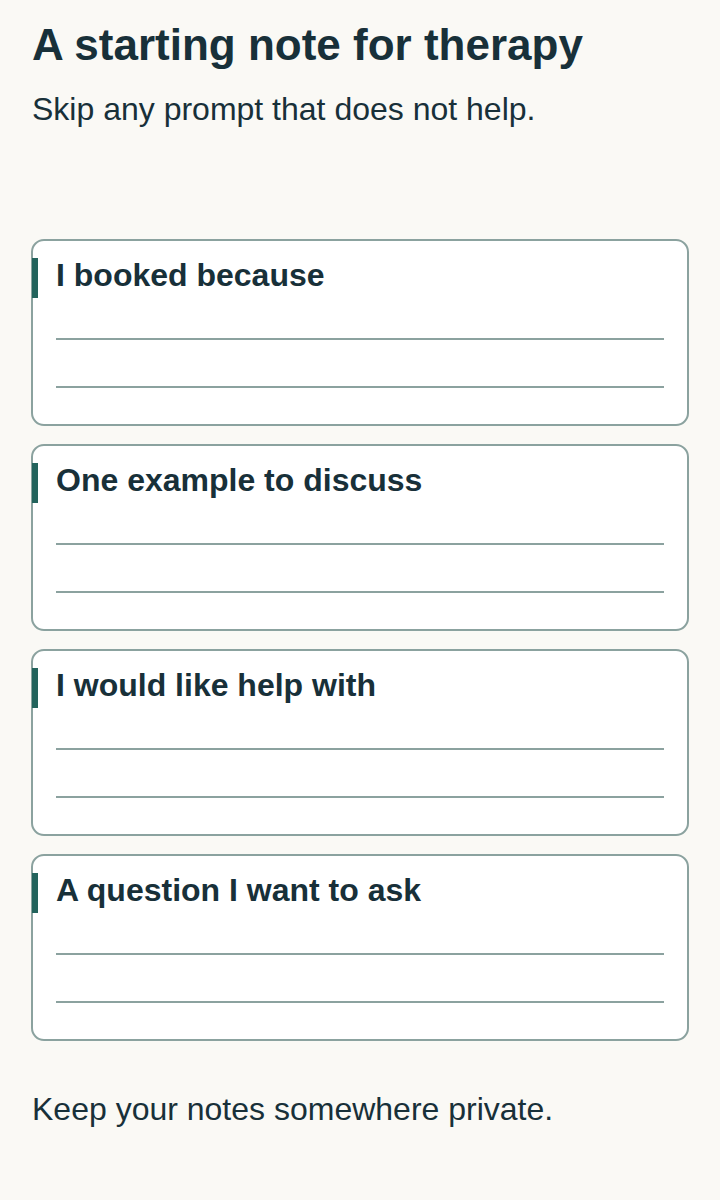
Use these prompts only if they help:
- I booked because: What led you to make the appointment?
- One example I want to discuss: A recent situation or recurring concern in your own words.
- I would like help with: Something you hope to understand or handle differently.
- A question I want to ask: A practical concern or something about working together.
A starting note for therapy
- I booked because
- One example to discuss
- I would like help with
- A question I want to ask
Keep your notes somewhere private.
An example starting note: “I have been overwhelmed by work and family decisions. I want help understanding what keeps happening. I am not sure where to begin.” This is an illustration, not a patient account.
Leave a prompt blank if you do not have an answer. You can tell the therapist that you need help finding a starting point or that a subject feels difficult to discuss. Ask what information they need and talk about your comfort level rather than trying to write your full history beforehand.
Choose the questions that matter to you
NIMH suggests asking about a therapist’s credentials and experience, their approach, the goals of therapy, how progress will be assessed, and confidentiality and its limits. You might bring two questions:
- “How would you approach the concern I have described, and how would we review progress?”
- “What stays confidential, what are the limits, and how do you handle records?”
For a longer list, use questions to ask your therapist. You do not need to cover the whole list in one appointment.
Keep the agenda small
Put the most important topic first so you can find it during the session. If you want a structured starting page, build a free session agenda. You can also use paper. Keep any copy somewhere appropriate for personal information.
Already attending therapy? Use the preparation guide for an upcoming session for a shorter check-in focused on what has happened since your last appointment.
Source and scope
National Institute of Mental Health: Psychotherapies, checked September 12, 2026. The source supports the questions about treatment, provider fit, fees, and confidentiality. The starting-note format is an educational organizing aid, not a clinically validated assessment.
Therapy Agenda offers preparation resources, not therapy, diagnosis, medical advice, or emergency support. A qualified mental health professional can discuss care suited to your circumstances. See the site’s safety information.